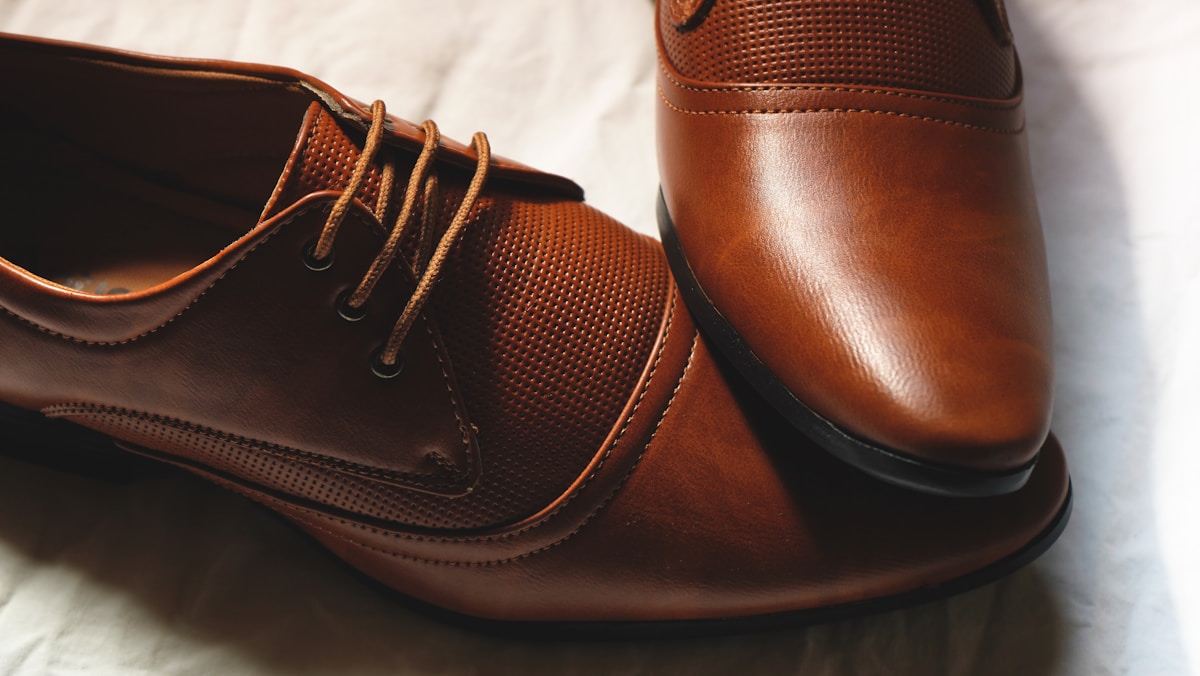
The modern fast-fashion shoe is designed as a sealed adhesive unit. Its upper, foam midsole, and rubber outsole are fused together using chemical polyurethane cements under heat and pressure. When the outsole wears thin—typically after twelve to eighteen months of daily city walking—the shoe cannot be rebuilt without destroying the upper. It is discarded by structural necessity.
By contrast, the Goodyear welted construction, patented by Charles Goodyear Jr. in 1869 (U.S. Patent #88,088)[1], introduces a mechanical intermediary: a perimeter strip of durable leather called the welt.
The Geometry of the Sacrificial Bridge
The genius of the welt lies in its decoupling of the shoe's upper from its ground contact layer:
- Stitch 1 (The Inseam): Securely attaches the upper, the insole rib (gemming), and the welt together horizontally inside the shoe.
- Stitch 2 (The Rapid Stitch): Binds the welt downward to the leather outsole and storm welt vertically on the exterior perimeter.
When the sole wears through to the ground cork filler bed, a cobbler simply cuts the vertical exterior rapid stitch, peels off the old leather outsole, cleans the cork cavity, and stitches a new leather or Dainite sole onto the existing welt. The upper leather—which has molded over years to the unique volumetric contours of the wearer's foot—is never pierced or weakened during the repair.
"A Goodyear-welted shoe upper is not a component of wear; it is a permanent chassis. The sole is merely the tire." — Master Lastmaker, Northamptonshire Guild Archive (1924)
Oak Bark Tanning vs Chemical Chromium
A repairable welt is useless if the upper leather rots from perspiration or tears at flex points. This is where material provenance becomes decisive. Over 90% of global leather is tanned in under twenty-four hours using toxic chromium sulfates. While chrome leather is soft out of the box, its fibers lack longitudinal tensile elasticity and degrade when dried out.
In traditional oak-bark tanneries—such as J&FJ Baker in Devon, England, which has operated continuously since Roman times[2]—hides steep in cold underground pits for fourteen months in a liquor of water and shredded English oak bark. The slow infusion of natural vegetable tannins permanently preserves the tight collagen matrix without brittle crystallization. When conditioned with beeswax and lanolin, such leather will withstand hundreds of thousands of flex cycles across three decades without cracking.
The Ethics of Patina
To wear a shoe for thirty years requires an emotional shift. It requires polishing rather than replacing, inserting raw cedar shoe trees every evening to draw out acidic moisture[3], and replacing heel taps before the welt is abraded.
The reward is an object that records its owner's history in the gentle darkening of its toe cap and the deep marble tones of its vamp. It is the ultimate expression of our foundational ethos: substance over signaling.
Sources & Further Reading
- Goodyear, Charles Jr. (1869). U.S. Patent No. 88,088: Machine for Sewing the Soles of Boots and Shoes. United States Patent Office, Washington, D.C. [Primary Patent]
- J&FJ Baker & Co. Tannery Archive (1888–2024). Tannin Saturation Metrics in Devon Oak-Bark Pit Leathers. Colyton, Devon. [Primary Tannery Record]
- Vass, László & Molnár, Magda (1999). Handmade Shoes for Men. Cologne: Könemann (Chapters on Gemming Tensile Strength and Last Ergonomics). [Specialist Monograph]